

Why understanding wood stamps is essential for your outdoor landscaping
Technical note: Installation details vary by municipality, product line, board profile, fastening system, loads, and site conditions. Use this article as general guidance only; confirm the final design with your local building department, the manufacturer's current installation guide, and a qualified contractor or engineer when structural loads are involved.
Whether you're planning a deck in Quebec, choosing the right wood remains a key step. Each board you buy must bear a grade stamp or an end plug. These markings provide essential information about the visual and structural quality of the material. Ignoring these indicators can lead to unpleasant surprises on the surface of your outdoor space, whether it's a composite deck or a traditional patio.
What is a grade stamp on wood?
A grade stamp is a mark applied by a certified organization after visual or mechanical inspection of each piece of wood. The inspection evaluates the number and size of defects (knots, cracks, twists) to ensure a consistent level of quality. These standards are essential to ensure the durability and safety of your structure, whether it's deck flooring or a patio floor.
Key information on the stamp
- Certification agency: indicates the organization (e.g., SPIB, ALSC) whose rules were used for grading.
- Mill: name or code of the site where the wood was processed.
- Wood species: abbreviation of the species (e.g., SPF for Spruce-Pine-Fir).
- Grade: positioned in the center of the stamp, from highest to lowest: FAS, Select, #1 Common, #2 Common.
- Surface finish: S for smooth or RS for rough sawn.
- Moisture content: Grn (more than 19% water), Dry (less than 19%), or KDAT (kiln-dried after treatment).
How to interpret this data to choose your boards
By consulting the stamp, you can determine if a board is suitable for its intended use. For a high-end composite deck, this data does not exist, but for a natural wood deck, you must ensure to:
- Select a high grade: FAS or Select offer fewer defects, ideal for an aesthetic surface.
- Prefer a smooth finish if you want to paint or oil the wood.
- Control moisture: wood that is too green risks warping as it dries on site.
Options for masking or removing marks
While these stamps are useful, they sometimes constitute a visual defect on your deck surface. Several solutions are available to you:
- Flip the board: place the stamp on the underside if the structure allows.
- Light sanding: remove the mark with a sander before applying the finish.
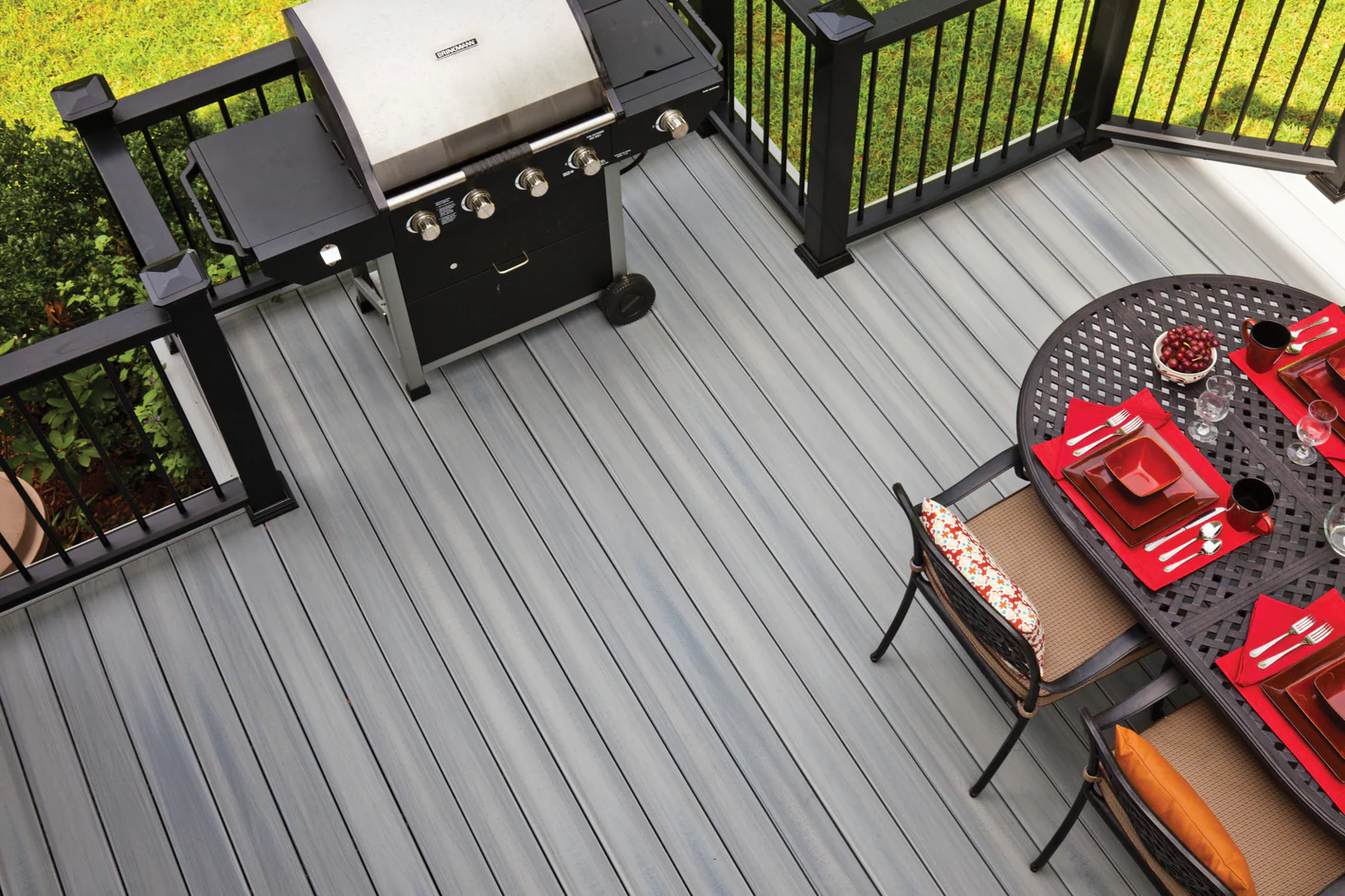
- Opt for a composite deck: Fiberon, TimberTech, Trex, and TruNorth products do not have stamps, ensuring a uniform surface without visible defects.
“Stamps ensure the traceability and quality of wood but can detract from the final appearance if not managed at the time of purchase.” - Outdoor landscaping expert
Advantages and disadvantages of stamped wood
Stamped wood remains a traditional choice appreciated for its natural charm and its ability to age gracefully over time. However, it presents challenges:
- Advantages: traceability, normative guarantee, wide availability.
- Disadvantages: visible defects, need for sorting, regular maintenance to prevent mold and cracks.
Maintenance and durability
To extend the life of your wood deck or patio, proper maintenance is crucial: annual cleaning, application of protectors (oil, varnish), checking screws, and anti-insect treatment. In contrast, composite offers increased resistance to stains and moisture and requires little maintenance, ideal for Quebec's climate.
Why choose a composite deck for your outdoor landscaping?
For a deck in Quebec or a composite deck without compromise, Fiberon, TimberTech, Trex, and TruNorth collections represent excellence. With their wide range of colors (Island Mist, Brown Oak, Spiced Rum…), these materials do not have stamps or apparent knots. They offer a uniform surface, resistant to bad weather, and require minimal maintenance. Opt for peace of mind and long-term durability, without the constraints of natural wood.