

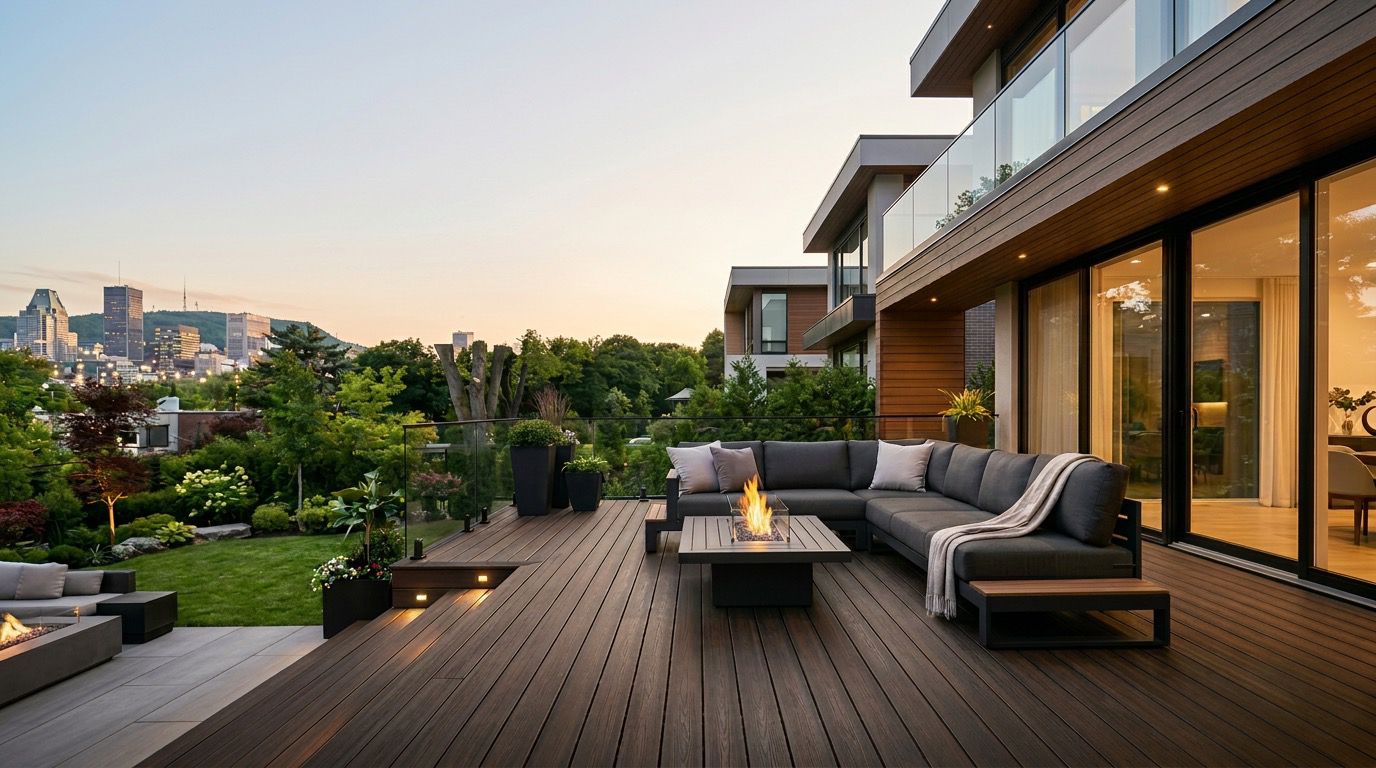
Composite Deck Color Guide: Finding Your Perfect Shade
Of every decision you make when building a composite deck, color is the one you will look at every single day for the next two decades. It shapes the mood of your terrasse, how hot the boards feel underfoot in July, how visible salt and debris are after a Quebec winter, and how well the whole project ties into your home's architecture. Get it right and your deck elevates your entire property; get it wrong and you live with a daily mismatch. This guide breaks down how to choose confidently, with the full palettes from Fiberon, TimberTech, Trex, and TruNorth in mind.
Why Color Is a Long-Term Decision — Not a Trend
With a wood deck, color is temporary: stain fades, you re-coat, and you can change the tone every few years. With composite, the color is engineered in and stays remarkably consistent for the life of the boards. That permanence is a feature — no restaining, no surprise fading — but it also means you should choose for the long run, based on your home and climate rather than a passing design fad.
How Composite Color Actually Holds Up
Premium composite boards are "capstocked": a tough polymer shell wraps the core and locks in pigment, shielding it from UV damage. This is why a quality Trex, TimberTech, or Fiberon board can carry a 25-to-50-year fade-and-stain warranty, while a stained wood deck looks tired in two or three seasons. Quebec's intense summer sun, which bleaches wood quickly, has far less effect on capstocked composite — an important reason these materials have become the regional standard.
Warm Tones: Inviting and Timeless
Light tans and sandstone. These warm, beachy colors feel relaxed and welcoming. A major practical perk in Quebec summers: light boards reflect heat and stay noticeably cooler underfoot than dark ones. They suit cottage, traditional, and farmhouse-style homes and pair naturally with wood-tone railings and earthy furniture. The trade-off is that fine dust and pollen can show more readily than on mid-tones.
Honey, oak, and medium browns. Rich warm browns mimic real wood grain without any of the maintenance, which makes them perennial best-sellers. They flatter almost any home style, hide everyday dust well, and work with both light and dark furniture. If you love the look of natural wood but never want to stain again, this family is your sweet spot.
Cool Tones: Modern and Sophisticated
Charcoal and espresso. Dark composites make a bold architectural statement and look stunning against white trim, black metal railings, and glass. They hide salt-free dirt and create dramatic contrast with light furniture and greenery. The trade-off to plan for: dark boards absorb more heat, so they run warmer underfoot in direct summer sun — worth considering for a south-facing terrasse used barefoot. Structurally, however, quality dark composite holds its shape extremely well.
Silver, slate, and cool grays. The most versatile family on the market. Gray bridges traditional and contemporary styles, hides dirt and water spots gracefully, and photographs beautifully. Lighter grays stay cooler in summer; mid-grays strike a balance between heat management and dirt-hiding. If you are undecided or planning to sell within a decade, a tasteful gray is the safe, broadly appealing choice.
Multi-Tonal and Wire-Brushed Finishes
The fastest-growing category is boards with streaked, multi-tonal coloring that convincingly imitates natural hardwood. Lines like Fiberon Sanctuary, TimberTech AZEK, Trex Transcend, and TruNorth offer these layered finishes, often with a wire-brushed texture for added realism. They add depth and richness that single-tone boards can't match, and they hide minor scuffs and debris exceptionally well — a smart choice for busy family terrasses.
Heat and Temperature: What Quebec Homeowners Should Know
Color directly affects surface temperature. On a sunny 30°C Quebec afternoon, a charcoal board can feel significantly hotter than a sand-toned one. If your terrasse faces south or west, gets full sun, and you expect bare feet and kids, lean toward lighter or mid-tones. If your deck is shaded, north-facing, or mostly used in the evening, a dark dramatic color is a great fit with no real downside.
Color Through Quebec's Seasons
Think past summer. Quebec winters bring snow, road salt, and freeze-thaw cycles. Light boards make white salt residue and sand more visible, while medium-to-dark tones disguise it between cleanings. UV fade resistance favors no single color — quality capstock protects all shades — but visible maintenance does vary, so factor in how the deck will look in March, not just July.
Matching Your Home and Its Surroundings
Modern homes: dark composites or cool grays create striking contrast with white render, black windows, and aluminum or glass railings. Traditional and cottage homes: warm honey, oak, and tan tones harmonize with classic siding, brick, and wood-tone railings. Transitional homes: mid-grays and multi-tonal boards adapt to almost anything. Always consider the fixed colors you can't change — siding, brick, roof shingles — and choose a deck tone that complements rather than competes with them.
Color Psychology and the Feel of Your Space
Warm tones read as energetic and social — ideal for a terrasse built around dining and entertaining. Cool grays and charcoals read as calm and refined — perfect for a quiet retreat or a sleek modern aesthetic. Dark boards add visual weight that grounds a large deck, while light boards make a compact terrasse feel more open and airy.
How to Test a Color Before You Commit
Never choose from a tiny chip or a screen. Order full-size sample boards from Fiberon, TimberTech, Trex, or TruNorth and place them on your actual deck site. View them in morning light, harsh midday sun, and soft evening shade — colors shift dramatically across the day. Lay the sample next to your siding, railing, and nearby brick or stone to judge the real combination, and step back to see it from the yard and the street, not just up close.
Popular Quebec Pairings That Always Work
- Charcoal deck + black aluminum railing + white-trimmed home — clean, modern, high contrast.
- Warm honey deck + wood-tone or glass railing + brick home — classic and inviting.
- Mid-gray multi-tonal deck + cable or glass railing — versatile and contemporary, hides everything.
- Sand/tan deck + cottage-style white railing — bright, relaxed, and cool underfoot for summer.
A Color That Lasts for Decades
Because a quality composite deck holds its color for 20 years or more, the time you invest in choosing pays off every single day you step outside. Balance aesthetics with the practical realities of Quebec heat, snow, and your home's architecture, and you'll land on a shade you love for the long haul. With the full ranges from Fiberon, TimberTech, Trex, and TruNorth, the right terrasse color is out there — and it will still look right long after a wood deck would have needed its fifth coat of stain.
Not sure which shade is right for your home? Schedule your free color and design consultation today.