

Strengthen your composite deck for a perfect shelter
Technical note: Installation details vary by municipality, product line, board profile, fastening system, loads, and site conditions. Use this article as general guidance only; confirm the final design with your local building department, the manufacturer's current installation guide, and a qualified contractor or engineer when structural loads are involved.
At Magasin de Patio, we know that outdoor living in Quebec requires durable solutions. Installing a roof on an existing composite deck may seem simple, but only suitable foundations will guarantee the solidity of your deck in Quebec.
Why most existing decks are not enough
An existing deck is not automatically sized to receive a roof. Dead, snow, wind, and occupancy loads must be recalculated for your area; without checking the footings, posts, beams, and connections, the structure can sag or become non-compliant.
- Floor load: confirm the design load with local code, the approved plan, and span tables.
- Roof load: size for the snow, wind, and dead loads applicable in your municipality.
- Suitable piles: diameter, depth, and reinforcement must be defined by the plan, soil, and concentrated loads.
"Adding a roof turns the deck into a different load-bearing structure; loads must be recalculated before reinforcing." - Jean Dupont, structural engineer
Options to adapt your foundations
Several methods can strengthen your Fiberon, Trex, TruNorth, or TimberTech composite deck before adding a roof:
- Enlarge existing foundations: Demolition and excavation to increase footing size.
- Install independent slabs: New piles dedicated to the roof, without touching the deck structure.
- Post alignment: Roof posts must align vertically with deck posts.
- Perimeter reinforcement: blocking and load transfers must be designed for the posts, concentrated loads, and approved connectors.
Framing techniques for a durable roof
Manual roof installation involves several key steps:
- Ridge beam: Positioned at the exact height to hang the rafters.
- Rafters: size, spacing, and connectors must be calculated from span, snow/wind loads, and the roof plan.
- Birdsmouth cuts: Birdsmouth on the header or top of the wall for optimal support.
- Collar ties: Collar ties reinforce lateral stability.
- Gable enclosure: Studs or trusses to support the overhang and withstand Quebec winds.
Choosing the right composite materials for your shelter
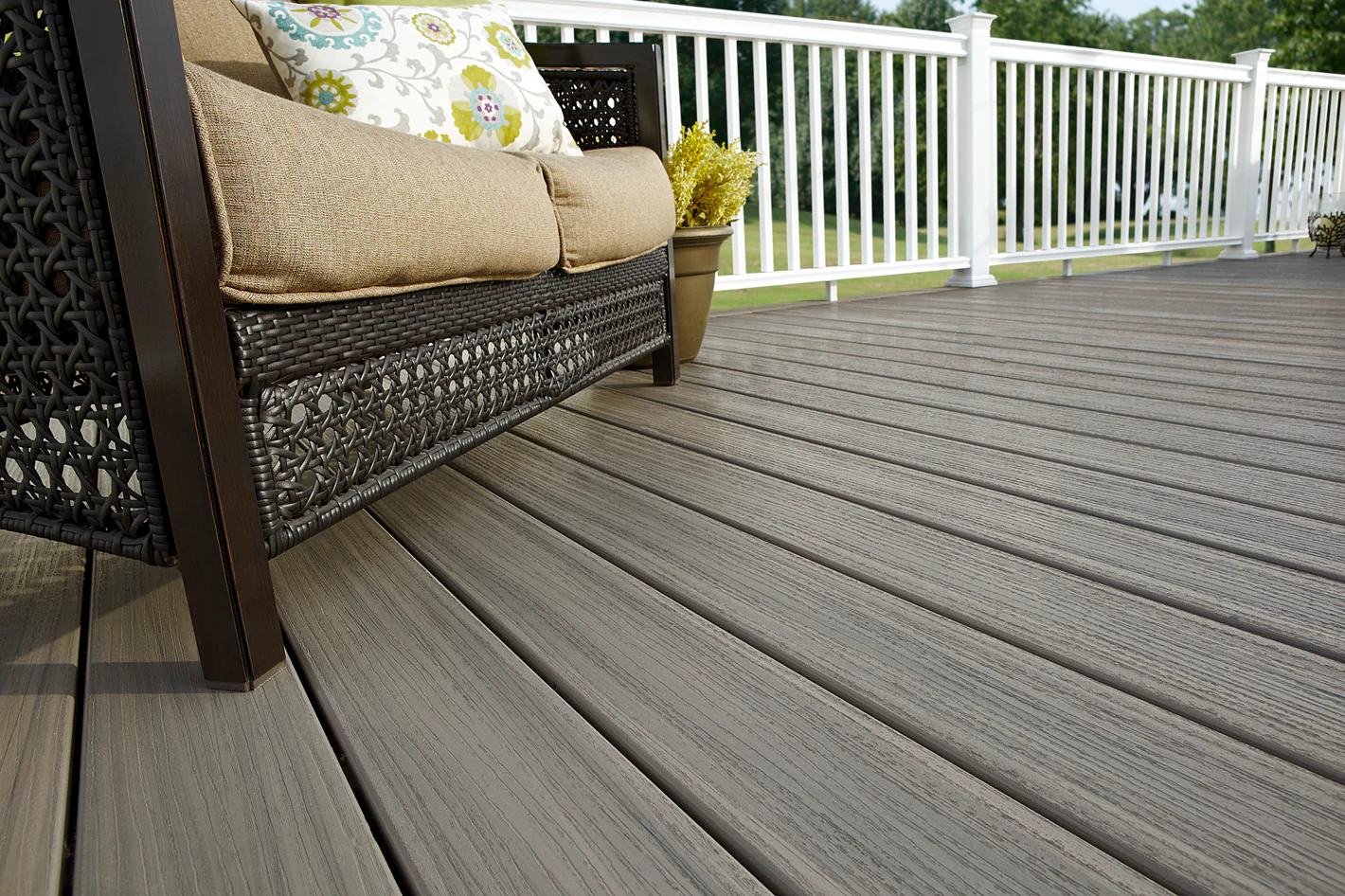
For the flooring of your composite deck, choose weather-resistant and easy-to-maintain finishes:
- Fiberon: Colors like Slate and Monterey Taupe for a modern style.
- Trex: Transcend range with Beach Dune and Saddle for a warm look.
- TimberTech: Grey Oak and Walnut shades for a natural accent.
- TruNorth: Antique Pebble or Rustic Brown finish for an authentic look.
Conclusion
Installing a roof on your composite deck requires a study of loads and foundations. Whether you opt for enlarging the footings or adding independent piles, Magasin de Patio in Quebec supports you through every step of your outdoor living project. Contact us for a free evaluation.