

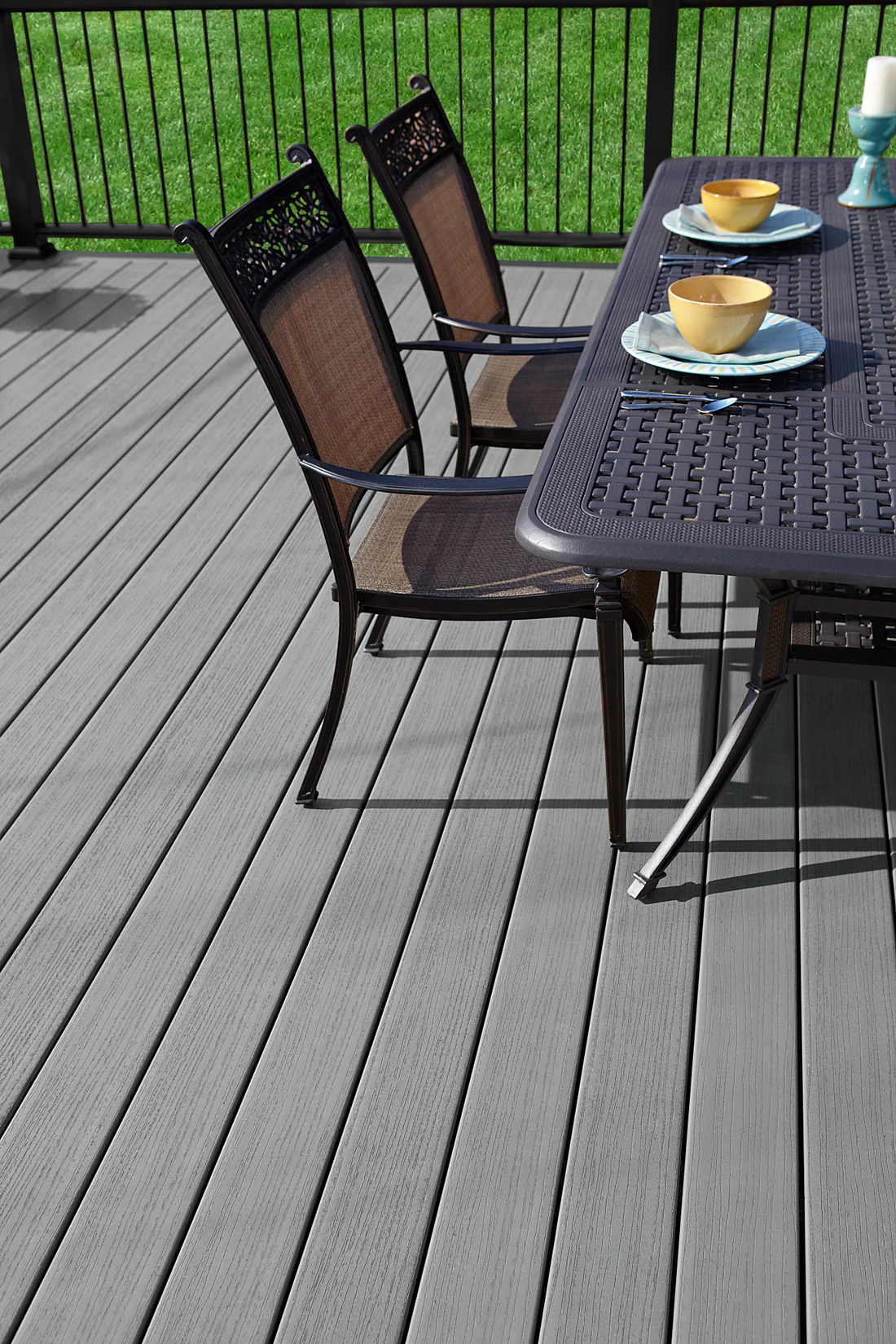
Protect Your Foundations Before Installing Your Deck or Patio
Technical note: Installation details vary by municipality, product line, board profile, fastening system, loads, and site conditions. Use this article as general guidance only; confirm the final design with your local building department, the manufacturer's current installation guide, and a qualified contractor or engineer when structural loads are involved.
In Quebec, the seasons are demanding for any outdoor structure. Whether you're planning a Fiberon, TimberTech, Trex, or TruNorth composite deck or a custom deck in Quebec, the secret to a durable outdoor living space begins beneath your feet, with solid foundations. One of the major challenges during preparation is keeping foundation holes free from collapse and water stagnation.
Why Use Cardboard Tubes for Your Foundations?
Installing cardboard tubes (sonotubes) in your post holes is a simple and economical solution to prevent wall collapse. Here are the main advantages:
- Adapted size: choose tubes 12” or 16” in diameter and at least 6’ high for optimal support.
- Affordable cost: at around $20 per unit, you save time and money by avoiding re-digging.
- Temporary resistance: the cardboard holds well in the ground until foundation inspection.
- Disposal or biodegradation: remove the tubes after inspection or let them naturally degrade in the soil.
By placing these tubes in each hole before pouring concrete, you significantly limit the risk of your work being delayed by wall collapse. Furthermore, they can be easily removed or decompose without leaving harmful residue in the soil.
How to Prevent Water Accumulation in Holes?
Another enemy of foundations is stagnant water. In Quebec's climate, sudden downpours or snowmelt can quickly fill your holes, making inspection impossible. Here are some proven techniques:
- Plywood panels: cut a board to cover the hole hermetically.
- Robust tarps: secure a waterproof tarp using stones or stakes.
- Improvised covers: use an old trash can lid or a metal sheet for instant coverage.
Professional tip: coordinate your foundation inspection date to reduce the holes' exposure time to bad weather, and always plan for leeway in case of unexpected rain.
"To support the longevity of your deck and avoid any delays, it's essential to protect your foundation holes from the start of the project." - Construction Expert at Magasin de Patio
Key Steps for a Successful Outdoor Living Space
- Step 1: Marking and digging – mark out the location of your composite deck and dig each hole to the required depth.
- Step 2: Sonotube installation – insert the cardboard tubes into each hole, checking their verticality with a level.
- Step 3: Water protection – quickly cover the holes using plywood, tarps, or covers to prevent infiltration.
- Step 4: Foundation inspection – proceed with municipal inspection as soon as possible, ideally during dry weather.
- Step 5: Concrete pouring – once authorized, fill the tubes with concrete suitable for a robust outdoor living space.
Following these steps ensures a solid base for leading brands of composite deck boards: Fiberon, TimberTech, Trex, or TruNorth. You'll enjoy a durable result, without fear of damage related to freeze-thaw cycles or stagnant water.
Conclusion and Next Steps
By investing a few tens of dollars in cardboard tubes and protecting your holes from potential rain, you optimize your deck in Quebec and guarantee a smooth installation. These simple but effective practices make all the difference for the durability and aesthetics of your composite deck.
Contact our team at Magasin de Patio for personalized advice and discover our Fiberon, TimberTech, Trex, and TruNorth board options adapted to the Canadian climate.