

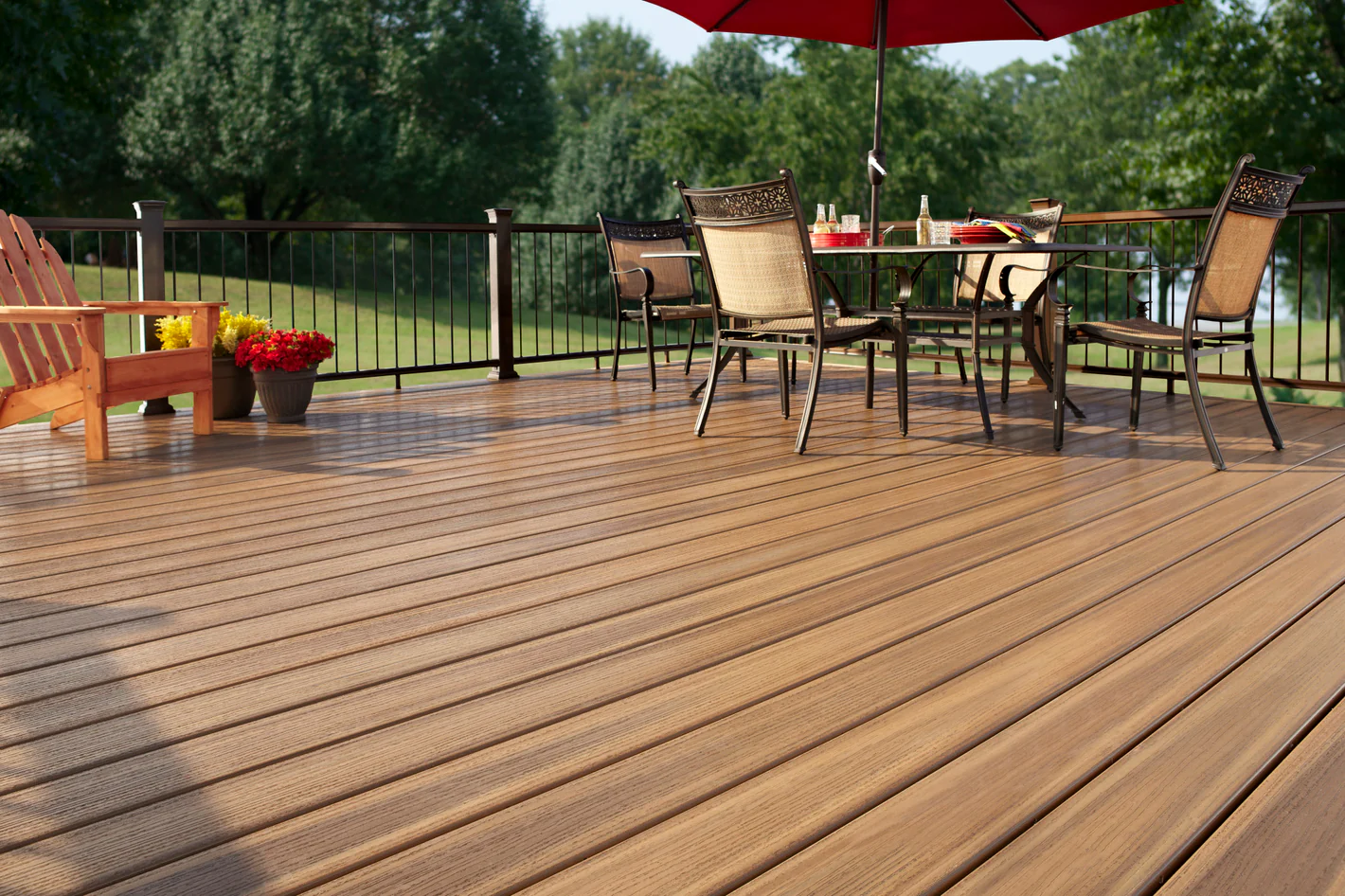
Ensuring the Stability of Your Composite Deck
In Quebec, composite decks are gaining popularity due to their durability and low maintenance. However, an often-overlooked aspect during the construction of a composite deck is bracing to prevent "racking," which is the risk of lateral sway under the effect of wind or loads. Whether you choose Fiberon, TimberTech, Trex, or TruNorth decking boards, installing a diagonal anti-sway system is essential to guarantee the solidity and longevity of your outdoor living space.
Why a Diagonal Anti-Sway System is Essential
Racking manifests as a lateral displacement of the structure, which can compromise the safety and aesthetics of your deck. Without proper reinforcement, your deck can deform, creating irregular gaps between the boards and exposing the structure to excessive forces. Diagonal bracing distributes these forces across the entire deck frame, providing optimal resistance.
- Main function: Stabilize the structure by preventing any lateral movement.
- Key advantage: Prevent fasteners from loosening and maintain board alignment.
"A diagonal bracing system is a key element for the longevity of your composite deck." - Marc Gauthier, outdoor living expert
Bracing Methods for Decks with Horizontal Boards
For composite decks installed with horizontal boards, two main solutions are available to ensure effective bracing:
- Metal T-brace: A long metal strip fixed diagonally over the joists. This rigid plate, often made of galvanized steel, is positioned from the lower corner on one side to the upper corner on the other, keeping the structure in a single plane.
- Composite Diagonal Board: A board installed diagonally under the deck frame. By using the same composite material as your main boards (Fiberon, TimberTech, Trex, or TruNorth), you get not only solid reinforcement but also a uniform finish under your deck.
Each method offers advantages: the metal T-brace is discreet and quick to install, while the diagonal board harmonizes the aesthetic appearance of the underside of your composite deck. The choice will depend on your visual preferences and access constraints during installation.
Case of Decks with Diagonal Boards
If you have opted for a diagonal layout (boards laid diagonally), sweep bracing is generally not required. The angular arrangement of the planks naturally creates a sole effect that effectively resists lateral forces. This configuration, often appreciated for its aesthetics, simplifies the stabilization step while maintaining the robustness of the structure.
Recommended Steps for Installing Diagonal Bracing
Here are the general guidelines for integrating an anti-sway system into your deck in Quebec project:
- Structure analysis: Check joist spacing and the overall condition of the frame before any intervention.
- Method choice: Select a metal T-brace or prepare a composite board (Fiberon, TimberTech, Trex, TruNorth) to the appropriate dimensions.
- Diagonal measurement: Measure the distance between two opposite corners of the structure to determine the necessary length of the reinforcement.
- Fastening: For the T-brace, screw the plate to the joists with galvanized screws. For the diagonal board, use brackets and screws approved for composite on the underside of the frame.
- Final verification: Check for any lateral play by applying pressure to the edges of the deck.
Thanks to these simple steps, your outdoor living space will gain stability without compromising the neat appearance of your composite deck.
Material Selection Criteria
The choice of materials for your anti-sway system must take into account:
- Corrosion resistance: Prioritize galvanized steel for the T-brace, or screws specifically designed for composites.
- Aesthetic compatibility: Opt for a diagonal board that matches your Fiberon, TimberTech, Trex, or TruNorth boards.
- Ease of installation: Pre-drilled reinforcement or reinforcement supplied with brackets will simplify your work.
Meeting the Demands of the Quebec Climate
The Quebec climate imposes temperature variations and freeze-thaw cycles. Solid bracing helps prevent crack formation and prevents excessive movements that can result from these changes. By combining a well-braced frame with quality composite boards, you get a deck that is resistant to Canadian weather.
Conclusion
Whether you are building a new composite deck or adding reinforcement to an existing patio, diagonal bracing is a guarantee of longevity and safety. Choose the most suitable method—metal T-brace or composite diagonal board—keeping in mind the constraints of your structure and the desired style.
Next Steps for Your Outdoor Living Project
Need personalized support for your outdoor living space in Quebec? Our experts in composite deck installation (Fiberon, TimberTech, Trex, TruNorth) guide you through every step, from design to bracing implementation.