

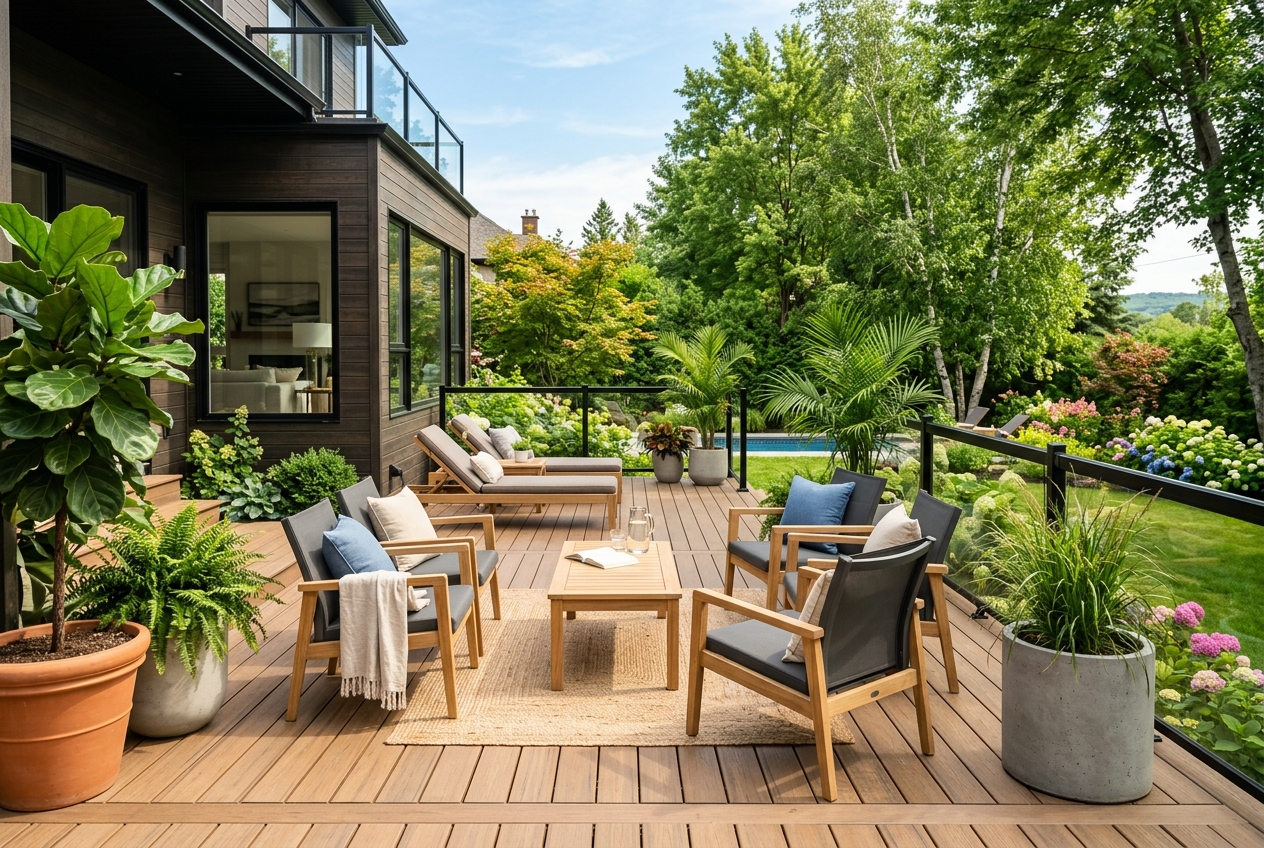
Outdoor furniture and heatwaves: the art of staying cool on your patio
The Quebec summer is a beautiful and highly anticipated season, but when July and August settle in with their dreaded heatwaves, our backyard can quickly turn into a real furnace. If you have invested in a stunning composite deck to fully enjoy the beautiful season without worrying about maintenance chores, there remains a major challenge to overcome to ensure your daily well-being: the wise choice of your outdoor furniture. In full sun, under a particularly high UV index, certain materials accumulate so much heat that they become unusable, deeply uncomfortable, or even literally dangerous for bare skin. These poor landscaping choices can quickly ruin your moments of relaxation, your precious staycations, or your summer gatherings with friends.
This post doesn't just skim over the aesthetic trends of the year; it dives into the heart of the thermal properties of furnishing materials to address a very specific issue of our local climate. The goal is to guide you step by step in selecting chairs, tables, and armchairs that repel heat rather than greedily absorbing it. Whether you want to set up a shaded reading nook, a large space to entertain your guests during warm summer evenings, or a peaceful haven surrounded by lush plants, understanding how metals, woods, and fabrics react to solar rays is absolutely essential. Here is how to maximize comfort on your patio and avoid unpleasant thermal surprises in the middle of a heatwave.
The direct impact of Quebec heatwaves on your outdoor setup
Quebec's climate is known for its extremes, and our summers are no exception to the rule. In July and August, heatwave periods are often accompanied by overwhelming humidity and a blazing sun that beats directly down on our outdoor living spaces. This intense heat changes the way we use our backyard. Instead of sitting in full sun at its zenith, seeking shade and coolness becomes the absolute priority. Your outdoor furniture takes the full brunt of this prolonged exposure to ultraviolet and infrared rays. If the materials are not suitable, sitting on a patio chair at two in the afternoon can feel like a survival test. It is therefore essential to anticipate these extreme weather conditions right from the purchasing process of your furniture, to ensure that your investment remains functional and pleasant throughout the warm season, from the morning coffee to the late-night cocktail.
Thermal synergy on a composite deck
When it comes to high-end outdoor landscaping in Quebec, the composite deck has become the undisputed standard of excellence. Whether you have wisely opted for durable boards from reputable brands like Fiberon, TimberTech, Trex or TruNorth, you benefit from a sturdy, elegant, splinter-free surface that requires minimal maintenance. However, it must be understood that modern composite, although exceptionally resistant, has its own thermal retention characteristics. Under a blazing sun, the surface of your patio will naturally accumulate heat. It is therefore crucial that the furniture resting on it does not exacerbate this phenomenon. Combining a south-facing deck with furniture that massively retains heat will create an uncomfortable heat island. Conversely, choosing furniture materials with low thermal conductivity will help balance the environment and preserve a perfectly tempered outdoor living space.
Dark metals: the burning trap of July afternoons
Wrought iron, steel, and aluminum painted in black or charcoal grey are extremely popular for their industrial, modern, and sleek look. Unfortunately, from a purely thermal standpoint, they are probably the worst options for a setup exposed to full summer sun. Dark metals have very high thermal conductivity, which means they quickly absorb solar heat and transfer it just as quickly to anything that comes into contact with them, including your skin. Leaving a black steel chair in the sun for an hour in July is enough for it to reach temperatures capable of causing superficial burns, which are particularly dangerous for young children in swimsuits. If your backyard lacks natural shade, it is highly recommended to avoid furniture made entirely of dark metals for your main relaxation areas.
Pale powder-coated aluminum: a reflective metallic alternative
If you are a die-hard fan of the contemporary style offered by metallic structures and want to enjoy the lightness and rust resistance of aluminum, all is not lost. The solution lies in the colour and finish. Powder-coated aluminum in very light shades, such as pure white, cream, pearl grey, or beige, completely changes the game. Thanks to a physical property called albedo, light colours reflect a large majority of solar radiation instead of absorbing it. A white aluminum sofa frame will remain surprisingly warm to the touch, even after several hours of direct sun exposure. In addition, aluminum dissipates heat very quickly as soon as a cloud passes or a breeze picks up, making it an excellent choice for composite decks in Quebec, provided you stick to a light and bright colour palette.
Teak wood: the natural champion of thermal regulation
When it comes to combining luxury, durability, and extreme thermal comfort, teak wood reigns supreme in the world of outdoor furniture. Unlike metals, wood is a natural insulator with very low thermal conductivity. Even in the middle of an August heatwave, the armrests of a teak chair will never become burning hot to the point of being untouchable. Teak is particularly prized because its natural oils protect it against moisture, rot, and insects, which are essential characteristics to survive Quebec winters and humid summers. On a composite deck, teak brings a beautiful visual and organic warmth, while ensuring that your lounge chairs and dining tables will always remain welcoming and temperate for your guests, no matter the time of day.
Other solid wood species for optimal summer comfort
Although teak is the absolute benchmark, there are other solid wood species that offer excellent thermal properties for your patio. Western red cedar, for example, is a classic in North America. It is lightweight, naturally weather-resistant, and stays remarkably cool under the sun. Eucalyptus is another increasingly popular alternative, offering a density similar to teak but often at a more accessible price. These woods all share the same ability to not aggressively store solar heat. By choosing wooden furniture, you ensure that you can sit down in shorts or a swimsuit without any apprehension. A light annual maintenance will be enough for these pieces of furniture to retain their natural beauty and continue to contrast elegantly with the sleek lines of your Fiberon, TimberTech, Trex or TruNorth composite flooring.
Light woven resin: elegance and coolness under the sun
Woven resin furniture, often called synthetic wicker, is a staple in Quebec backyards. Made from high-density polyethylene (HDPE), premium quality resin resists UV rays exceptionally well without fading or cracking. Thermally speaking, woven resin does not get as burning hot as metal because its woven structure allows for slight air circulation. However, the rule of colours applies here with great strictness as well. Black or very dark brown woven resin will become uncomfortably hot in the middle of the day. For successful staycations and relaxing afternoons without excessive sweating, opt for woven resin conversation sets in off-white, light grey, or natural rattan imitation. These shades repel heat and bring a very refreshing bohemian or coastal look to your space.
Textilene: the perfect airy fabric for lounge chairs
If you are setting up a tanning area or a relaxation space around the pool on your deck, textilene is the material you absolutely must prioritize. It is a canvas made of polyester fibres coated with PVC, woven in a way that lets air and light pass through. This micro-perforated structure is the secret to its incredible summer comfort. Textilene retains neither water nor heat. Even exposed to the most blazing sun, it remains cool and flexible. Moreover, it conforms to the shape of the body, often eliminating the need for thick cushions that can sometimes feel too hot. Lounge chairs with a white aluminum frame and a light grey textilene canvas are the ultimate equipment for surviving Quebec heatwaves while lounging comfortably on your patio.
Outdoor cushions and fabrics: prioritize breathable acrylic
The choice of cushions is just as crucial as that of the furniture's structure. A thick cushion covered with a cheap, non-breathable polyester fabric will act like a heat sponge and make you sweat profusely. For your outdoor armchairs and sofas, demand solution-dyed acrylic fabrics, like the famous Sunbrella brand. These high-tech fabrics are designed to be highly breathable, allowing air to circulate freely and body heat to escape. Here are some golden rules for choosing your cushions in the middle of a heatwave:
- Opt for light colours: White, beige, sky blue, or mint green reflect sunlight.
- Check breathability: Ensure the fabric allows for good moisture wicking.
- Choose quick-drying foams: Reticulated foams (Quick Dry Foam) let air and water pass through, preventing the accumulation of heat and moisture inside the cushion.
The science of albedo applied to your patio colours
We mentioned it briefly, but the concept of albedo deserves special attention when designing your landscaping. Albedo is the reflective power of a surface. A perfectly white surface has an albedo of 1 (it reflects 100% of light), while a black surface has an albedo of 0 (it absorbs everything). On a south-facing composite deck in Quebec, playing with the albedo of your furniture is your best line of defense against overheating. By choosing white umbrellas, light cushions, natural wood tables, and pastel-coloured outdoor rugs, you significantly reduce the absorption of solar energy. The surrounding air will be less heated by radiation, creating a much more pleasant and temperate microclimate for you and your guests during your alfresco dinners.
The strategic integration of shade to cool your spaces
Choosing materials that do not overheat is the first step, but simply blocking the sun's rays remains the most effective method to combat the heatwave. The integration of shade must be thought out in conjunction with your furniture. A large offset umbrella (or cantilever umbrella) is essential. Make sure the umbrella canopy is light-coloured so as not to create a greenhouse effect underneath. Shade sails stretched over your dining area or garden lounge offer exceptional UV protection while letting hot air escape through the sides. If you have a larger budget, installing a bioclimatic pergola with adjustable louvers over your composite deck will allow you to modulate shade and natural ventilation to perfection throughout the day.
Vegetation as a natural and refreshing thermal shield
The cooling power of plants in patio design is often underestimated. Vegetation doesn't just add a touch of life and colour; it acts as a natural air conditioner through the process of evapotranspiration. Plants absorb water through their roots and release it as vapour into the air, which actively cools the immediate environment. To maximize the comfort of your composite deck during heatwaves, place large flower pots containing broad-leaved plants, ferns, or small shrubs around your seating areas. In addition to creating very pleasant moving shade zones, these plants will help lower the perceived temperature by a few degrees, transforming your yard into a true urban or suburban oasis of freshness.
Setting up specific relaxation zones for summer evenings
In Quebec, the heatwave doesn't always stop with the sunset. July and August evenings can remain heavy and hot. The layout of your deck must therefore be designed for these special moments when you host guests for drinks or dinner. If your furniture has accumulated heat all day (especially stone tables or massive metal structures), they will continue to radiate this heat well after nightfall, which is known as thermal inertia. This is why the choice of wood (teak, cedar) or light aluminum makes perfect sense: these materials cool down almost instantly as soon as the sun disappears. You will thus be able to fully enjoy your summer evenings, comfortably seated, without feeling unpleasant residual heat emanating from your own furniture.
Choosing dining tables: avoiding glare and overheating
The outdoor dining table is often the centrepiece of the deck. During summer meals, the choice of the tabletop material is crucial. Tables with a tempered glass top are popular, but they have two major flaws during a heatwave: they create unbearable glare by reflecting the sun directly into your guests' eyes, and the glass can become extremely hot to the touch. Natural stone tables (like dark granite) or concrete also store a phenomenal amount of heat due to their high thermal mass. For comfortable summer gatherings on your patio, opt for a large slatted teak wood table, or a matte powder-coated aluminum table. These surfaces will not blind you and will remain at a pleasant temperature to rest your bare arms on.
Staycations: creating an oasis of freshness near the pool
For many Quebecers, summer goes hand in hand with staycations, or holidays at home. If your composite deck surrounds a pool or spa, the transition between the refreshing water and the relaxation furniture must be smooth. There is nothing more unpleasant than getting out of cool water to sit on a burning lounge chair. In these specific areas, totally ban dark metal and cheap plastic that bakes in the sun. Bet on daybeds with light wood frames, equipped with mattresses covered in terry cloth or washable cotton covers that absorb moisture without retaining heat. Textilene, mentioned earlier, is also your best ally here. Also, remember to place these lounge chairs so that they benefit from the shade of a mature tree or a large umbrella during the most critical hours of the afternoon.
The importance of air circulation in furniture arrangement
The choice of materials isn't everything; how you arrange your furniture on your composite deck plays a determining role in your thermal comfort. To combat the stifling heat, you must maximize air circulation and promote refreshing breezes. Avoid pushing your furniture against the walls of the house, as these store heat and block the wind. Space out your armchairs and sofas to allow air to circulate freely around each person. If your patio is surrounded by solid fences, consider adding lattice panels or louvers that let the wind through. A good furniture arrangement will create natural wind corridors, using the principle of convective cooling to lower the perceived temperature in your outdoor living space.
Summer maintenance tips to preserve the coolness of your materials
Finally, even with the best materials, a few summer maintenance tricks will help you keep your deck and furniture as cool as possible. Before hosting guests on a particularly hot day, don't hesitate to lightly spray your Fiberon, TimberTech, Trex or TruNorth composite deck with a garden hose. The rapid evaporation of the water will absorb a large amount of heat from the patio surface, instantly cooling the space. You can do the same with the structures of your aluminum or resin furniture (avoiding soaking the cushions). Furthermore, keep your furniture clean: dust and dirt that accumulate on light surfaces can slightly darken them, thereby reducing their albedo and their ability to reflect the sun's rays. Regular cleaning with soapy water will ensure that your furniture retains its optimal thermal properties throughout the Quebec summer.