

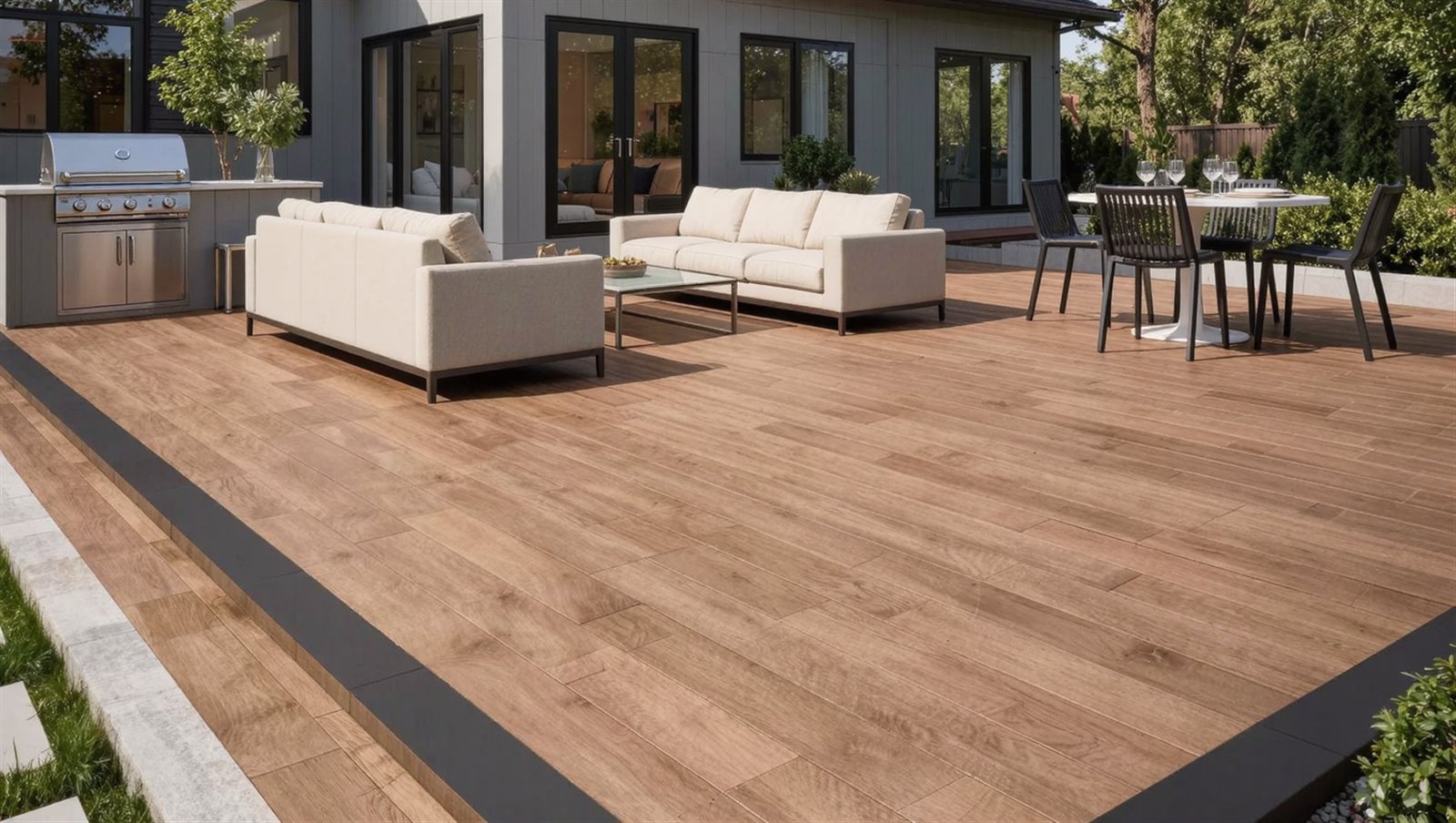
When the Deck Becomes a Natural Extension of the Living Room
Quebec's most beautiful outdoor spaces have one thing in common: you can't quite tell where the house ends and the deck begins. Large sliding doors, furniture that echoes the living room, coordinated tones between the interior floor and the composite boards: this indoor-outdoor continuity transforms how the whole living space feels. With a composite deck from Fiberon, TimberTech, Trex or TruNorth, the effect is as durable as it is spectacular.
Getting this transition right is no accident: it's a matter of levels, materials, palette and layout. Here's how to make your patio a true additional room, lived in as such from spring through fall.
The "Extra Room" Effect: Why It Changes Everything
An outdoor living room in continuity with the house visually enlarges the interior, invites you outside more often and multiplies the uses: morning coffee, remote work in the shade, family dinner, evening with friends. In Quebec, where every week of the warm season counts, this fluidity makes all the difference between a deck you look at and a deck you live in.
The Doors: The Link Between Two Worlds
Large-panel sliding doors, garden doors or folding doors: the more generous the opening, the more natural the transition. The view passes through, light circulates, and you move between spaces without thinking — serving tray in hand, for example.
Aligning Levels for Smooth Circulation
The ideal is a deck level with the interior floor, or one comfortable step down at most. A well-planned threshold prevents missteps and reinforces the sense of continuity. This is a point to plan from the structural design stage — a composite deck professional will calibrate the height while respecting drainage and building protection requirements.
Coordinating Floor and Board Tones
The visual secret of a successful transition: a dialogue between the interior floor and the deck. Pale wood inside? Opt for composite in warm, natural tones. Dark flooring? A rich brown or charcoal will create the echo. The Fiberon, TimberTech, Trex or TruNorth collections offer multi-tonal finishes that imitate wood with striking realism.
The Contrasting Border: Defining Without Dividing
A contrasting-colour border around the field of boards — a deep charcoal framing a warm brown, for example — gives the deck the look of a giant area rug and underlines its status as a room in its own right. It's also a signature design detail of high-end builds.
Living Room Furniture… Outside
Deep sofas with generous cushions, a glass coffee table, enveloping armchairs: contemporary outdoor furniture rivals anything in the living room. Choose silhouettes and textiles that echo your interior décor to reinforce continuity — cream tones and clean lines with a modern interior, for example.
Three Zones, Just Like Inside the House
Reproduce the main floor's logic outdoors: a lounge corner for relaxing, a dining area for meals, and if space allows, a cooking zone with a grill. Each zone has its clear function, and the whole lives exactly like an extension of the interior plan.
Light: Continuity Into the Evening
Extend the interior's lighting mood: soft wall sconces, lighting built into the steps, accent lamps on the coffee table. The goal is an intensity comparable to the living room in the evening, so that moving in and out stays natural even after sunset.
Textiles and Accessories: The Common Language
Cushions, throws and outdoor rugs echo the living room's textiles. Pick up one or two accent colours from your interior in the deck's accessories: the eye makes the connection instantly, and the whole space breathes coherence.
The View from Inside Matters Just as Much
A successful deck is also admired from the living room sofa. Compose the scene visible through the windows: furniture symmetry, potted greenery, a focal point (fire feature, outdoor art, a beautiful tree). In winter, this "postcard" dresses the view even when the deck sleeps under the snow.
A Floor That Stays Beautiful Barefoot
Continuity is also about comfort: you step from living room to deck barefoot, without a thought. Quality composite boards have no splinters or popping nails, and their textured surface stays pleasant — a clear advantage over aging wood, especially for children.
Four Seasons of Continuity, Zero Chores
A living room extension shouldn't become a maintenance project. Fiberon, TimberTech, Trex or TruNorth composite needs no stain, no sealant, no sanding: a sweep, a rinse with soapy water, and your "outdoor room" stays impeccable season after season, despite Quebec's freeze and thaw.
Think Added Value
Buyers actively seek this indoor-outdoor fluidity: it's one of a property's most photogenic and most persuasive selling points. A composite deck well integrated with the architecture is an investment you live daily and cash in at resale.
Professional Guidance: The Key to Coherence
Heights, structure, drainage, tone selection, zone layout: the perfect transition is decided in the technical details as much as in the design. A team specializing in composite decks in Quebec will orchestrate the whole, from plan to the last board.
The House's Colours as the Common Thread
Look at your façade: the siding, the window frames, the door. Those hues are your starting palette. A contemporary grey house calls for boards in neutral tones warmed by woody accents; warm brick pairs with deep browns. When the deck picks up the building's chromatic language, the whole looks like it was designed in a single gesture — exactly the effect architects aim for in Quebec's most successful outdoor projects.
The Role of Plants in the Transition
Greenery softens the line where the deck meets the house and the garden. A few large pots near the glass doors echo the living room's houseplants; shrubs along the deck's edge prepare the transition to the lawn. This gradient — houseplants, deck pots, garden — guides the eye and reinforces the impression of continuity that gives the concept all its charm.
Remote Work on the Deck: The Summer Office
Indoor-outdoor continuity has a happy consequence: your office can migrate outside. A stable table in the shade, an outdoor outlet for the laptop, wifi that reaches the patio — and video calls take on a vacation feel. On a cool, clean composite surface, free of splinters and wood dust, the setup comes together and packs away in two minutes, between meetings.
Adapting the Transition to Small Spaces
You don't need a huge yard to pull off the effect. On a compact deck, focus on the essentials: a level aligned with the interior, coordinated tones, one well-designed lounge corner facing the glass doors. Visual continuity is precisely what enlarges small spaces — that's where it pays off most, giving a modest patio the perceived scale of a true extra room.
The Four Seasons of the Outdoor Room
A true room is lived in all year, and your living-room extension too — each in its own way by season. In spring, the doors reopen at the first mild spell and the house finally breathes; in summer, the border disappears completely from morning to night; in fall, a throw and a patio heater extend outdoor suppers until the first frosts; in winter, the deck becomes the scene you contemplate from the sofa, prettily snowed-in and lit. Designing the transition means thinking about these four faces from the start — and composite crosses them all without a wrinkle.
Live Your Home All the Way Into the Yard
With aligned levels, coordinated tones, living-room furniture designed for the outdoors and a composite deck that asks for almost nothing, your living space no longer stops at the glass doors: it continues, naturally, out under the Quebec sky.
Want to extend your living room outdoors? Book your free design consultation today.