

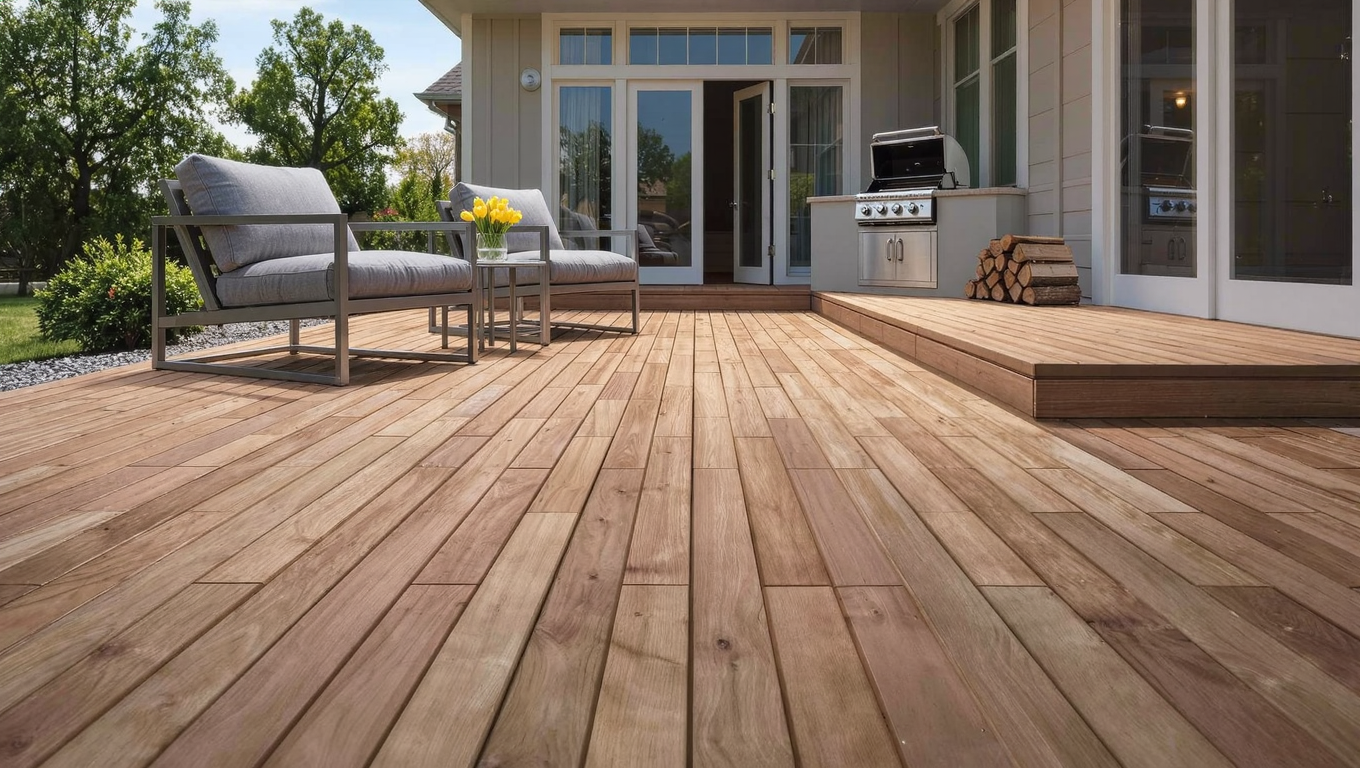
Eco-Friendly Composite Decking: The Sustainable, Responsible Choice
Choosing environmentally friendly materials is no longer a mere bonus: it's a priority for more and more Quebec homeowners. What's less known is that a composite deck ranks among the most eco-friendly choices for your outdoor space. Made largely from recycled materials and built to last for decades, a deck from Fiberon, TimberTech, Trex or TruNorth combines beauty, longevity and environmental awareness. Let's see why.
Behind its wood-like appearance lies a story of recycling and durability worth telling. Let's break down composite's real footprint.
What Composite Is Made Of
Quality composite is generally made from a blend of reclaimed wood fibers (sawdust, chips, wood residue) and recycled plastic (such as bags and packaging film). Rather than using virgin resources, these brands make use of materials that would otherwise be discarded. A single deck can incorporate the equivalent of thousands of recycled plastic bags.
Diverting Waste from Landfills
Every composite board represents waste diverted from landfills. Single-use plastic, notoriously hard to manage, finds a useful, durable second life here instead of polluting for centuries. At scale, this recovery represents considerable amounts of reclaimed material each year.
Saving Trees: Less Virgin Wood
Choosing composite means reducing the demand for virgin wood and tree-felling for decks. The wood fibers used often come from processing residue, maximizing the use of an already-cut resource rather than exploiting new ones. It's a concrete gesture toward forest preservation.
Durability as an Eco Gesture in Itself
The most eco-friendly material is often the one you don't replace. A wood deck may need replacing after 10 to 15 years; a quality composite deck frequently lasts 25 to 50 years. This longevity reduces resource consumption, construction waste and the energy tied to a replacement — a major, if less visible, environmental benefit.
Zero Stain, Zero Sealant: Fewer Chemicals
A wood deck requires stains, sealants and sometimes treatments, year after year. These products often contain compounds that end up in soil and water. Composite needs neither stain nor sealant: a simple wash with soapy water is enough. Over decades, that adds up to an impressive amount of avoided chemicals.
End of Life and Recyclability
More and more manufacturers are thinking about the end of life of their products, and some boards are themselves designed to be recyclable. Ask your supplier about take-back programs and company initiatives. The industry is moving toward an increasingly circular approach.
Comparing the Footprint: Composite and Treated Wood
Pressure-treated wood, long the standard, contains preservative chemicals and must be replaced more often. When you consider the whole life cycle — extraction, repeated treatments, replacements — a durable composite deck often shows a favorable environmental balance, especially thanks to its longevity and the absence of chemical upkeep.
Choosing Committed Brands
Not all brands are equal in environmental commitment. Manufacturers like Fiberon, TimberTech, Trex and TruNorth highlight the use of recycled materials and more responsible manufacturing practices. By learning about recycled content and certifications, you make an informed choice aligned with your values.
Eco-Friendly Everyday Care
The green aspect continues in use. To clean your composite deck, warm water, a mild soap and a soft-bristle brush are enough — no need for harsh products. This minimal, chemical-free upkeep is as good for the planet as for your wallet.
Reducing Impact from Installation
You can take it further: favor a local installer to cut transport, plan carefully to limit off-cuts, and recycle scraps when possible. Every decision counts to minimize your project's footprint.
The Life-Cycle Picture
To judge a material's real impact, you have to look at its whole life cycle: manufacturing, transport, use, maintenance and end of life. Thanks to its longevity and the absence of repeated chemical treatments, a composite deck spreads its footprint over several decades, whereas a wood deck stacks up replacements and upkeep products. Over time, the math often favors composite.
Less Water and Fewer Products for Upkeep
Maintaining a wood deck consumes not only stains and sealants, but also water and energy to apply them year after year. Composite makes do with an occasional wash with soapy water. This modest upkeep reduces pressure on resources and avoids releasing chemicals into your garden and waterways.
Composite and Garden Biodiversity
Unlike treated wood, whose preservatives can migrate into the soil, composite is inert and doesn't release chemicals into your ground. Around a composite deck, flower beds, container gardens and small garden ecosystems thrive without that source of contamination — a discreet but real benefit for the life of your yard.
Getting Well Informed Before Buying
Not all boards contain the same proportion of recycled materials. Before buying, ask about recycled content, the origin of the materials and any environmental certifications. A serious supplier will gladly answer. Getting informed ensures your "green" choice really is one, beyond the marketing.
Reducing Off-Cuts and Valuing Scraps
A well-planned installation limits material waste. A precise plan reduces off-cuts, and scraps can often serve small projects — planters, benches, steps — or be sent to the right recovery channels. Every fully used board is a respected resource.
A Concrete Gesture for Future Generations
Opting for recycled, durable materials is a choice that goes beyond simple comfort. It's participating, at your scale, in a more responsible way of consuming, and leaving behind a project that will have required fewer resources over its entire life. A beautiful deck can also be a meaningful one.
Beauty and Ecology No Longer Clash
For a long time, choosing eco-friendly seemed to mean compromising on appearance. That's no longer the case: today's recycled composites offer multi-tonal and wire-brushed finishes that convincingly imitate hardwood. So you don't have to choose between a beautiful deck and a responsible choice — the two now go hand in hand.
A Choice Consistent with a Sustainable Lifestyle
For many Quebec homeowners, the deck fits into a broader approach: composting, gardening, waste reduction. A deck made of recycled materials, cared for without chemicals and surrounded by plants, naturally extends this mindset into the yard. It's the consistency between values and concrete daily gestures.
Asking Your Supplier the Right Questions
Don't hesitate to ask your retailer about the origin of the materials, the percentage of recycled content and the manufacturer's environmental commitments. These conversations help you compare options knowledgeably and distinguish a genuine commitment from a mere marketing argument.
A Responsible Choice for Quebec
By choosing a composite deck from Fiberon, TimberTech, Trex or TruNorth, you opt for an outdoor space that values recycled materials, reduces waste and lasts for decades without chemicals. It's proof that you can combine beauty, durability and respect for the environment — a choice you can be proud of every time you step outside.
Want a beautiful and responsible outdoor space? Book your free design consultation today.