

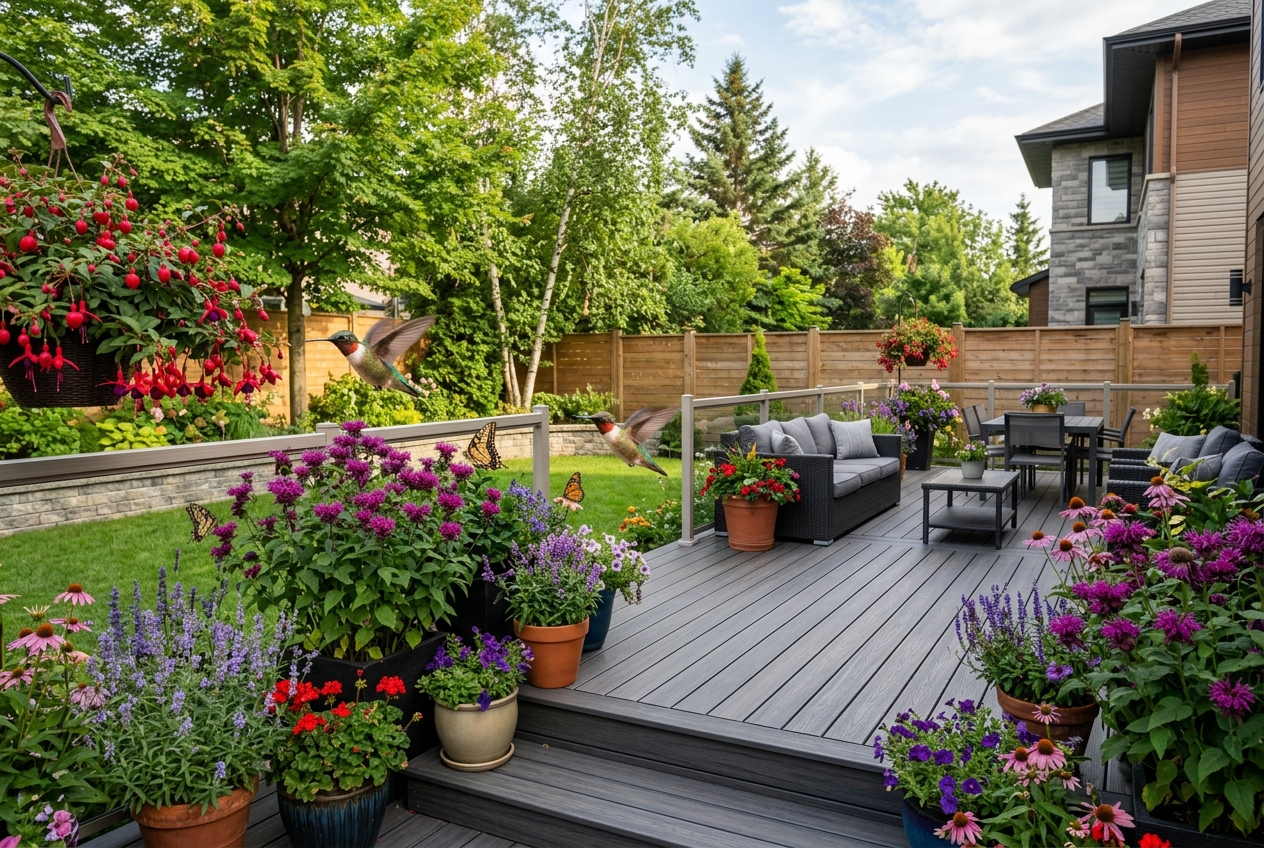
Attracting Hummingbirds and Butterflies: Creating a Pollinator Container Garden on Your Composite Deck in Quebec
Summer in Quebec is a precious season, a window of time when the heat of July and August invites us to live almost exclusively outdoors. For many homeowners, a staycation is the perfect opportunity to maximize the use of their backyard. What could be more relaxing than settling down on your deck with a good book, a refreshing beverage in hand, and watching an aerial ballet of bright colours? Unlike general gardening guides that often focus on keeping insects away or growing vegetables, we offer a different, targeted approach here: transforming your outdoor living space into a true sanctuary for desirable and fascinating local wildlife.
By creating a pollinator container garden directly on your patio, you invite nature to offer you a daily spectacle without compromising the comfort of your setup. The goal is to carefully select nectar-rich flowers that will act as irresistible magnets for hummingbirds and butterflies, all while adding a lush aesthetic to your decor. Whether you enjoy entertaining guests during long summer evenings or are simply looking for a peaceful haven for your summer relaxation, this guide tailored to the Quebec climate will show you how to blend the lasting beauty of your composite deck with the excitement of a vibrant, lively floral ecosystem.
1. Why Invite Pollinating Wildlife to Your Patio This Summer?
Designing a space to attract hummingbirds and butterflies goes far beyond simple floral aesthetics. In the heart of the Quebec summer, these little visitors bring continuous activity and a touch of magic to your backyard. Watching them forage from flower to flower creates an atmosphere of absolute relaxation, ideal for unwinding after a long day at work. Furthermore, by supporting local pollinators, you actively contribute to the biodiversity of your neighbourhood. It is a wonderful, eco-friendly way to interact with nature while enjoying the luxurious comfort of your outdoor space. Your guests, young and old, will inevitably be charmed by this natural spectacle unfolding just inches from their lounge chairs.
2. The Undeniable Benefits of a Container Garden on a Composite Deck
Container gardening offers unparalleled flexibility, especially on a deck. Unlike traditional flower beds which are fixed, pots allow you to adjust your space according to your desires or the sunlight needs of your plants. On a modern surface, this approach is ideal: it prevents direct contact between the soil and your home's structure. Pots create interesting visual focal points, allow you to play with heights, and define specific areas, such as a reading nook or a dining space. Moreover, at the end of the season, it is extremely easy to empty and store the containers, leaving your patio pristine to face the Quebec winter without any extra effort.
3. Choosing the Right Containers to Protect Your Investment
When investing in a high-end outdoor setup, protecting the surface is a priority. Whether your patio is built with Fiberon, TimberTech, Trex, or TruNorth boards, adding flower pots poses no problem if you choose the right containers. Opt for pots made of lightweight resin, fibreglass, or high-quality recycled plastic. These materials perfectly mimic ceramic or stone but are much lighter to move and won't scratch the surface of your composite deck. Avoid untreated metal that could rust and stain the boards, as well as raw terracotta which, by absorbing moisture, can become very heavy and damage the finish if dragged abruptly.
4. The Crucial Importance of Drainage and Aeration Under Your Pots
Good drainage is the secret to a successful container garden, but you also need to manage the escaping water to keep your deck in perfect condition. It is highly recommended to slightly elevate your pots. Use small pot feet or sturdy saucers with rubber pads. This elevation allows air to circulate freely under the container, preventing moisture from stagnating on the composite boards. Although modern materials are designed to resist mould and rot, good airflow prevents the formation of water rings or mineral deposits that could dull the appearance of your beautiful outdoor living space during the August heatwaves.
5. Potting Soil and Fertilization: The Recipe for Summer Blooming Success
For your plants to produce maximum nectar and attract pollinators throughout July and August, they need a rich, well-aerated substrate. Never use ordinary garden soil in your pots; it will compact and suffocate the roots. Opt for a premium potting soil, ideally enriched with marine compost or perlite to retain moisture during hot Quebec days. As for fertilization, potted plants quickly deplete their nutrients. A natural slow-release fertilizer applied at the beginning of summer, or an organic liquid fertilizer diluted in watering every two weeks, will guarantee abundant and continuous blooming to the delight of butterflies and hummingbirds.
6. Fuchsia: The Ultimate Hummingbird Magnet for Shaded Areas
If your deck has shaded areas, for example under a pergola or an awning, fuchsia is the must-have plant for your setup. Its magnificent trailing flowers in the shape of tubular bells, often bi-coloured (pink, red, purple, and white), are perfectly adapted to the long beaks of hummingbirds. These birds are naturally attracted to the colour red and will spot your fuchsias from far away. Planted in hanging baskets or large elevated pots, fuchsias bring a touch of Victorian elegance to your patio. They prefer coolness and partial shade, making them the perfect allies to decorate the less sunny corners of your summer relaxation space.
7. Bee Balm (Monarda): The Favourite Nectar of Quebec Butterflies
Bee balm is a native North American plant that thrives wonderfully in the Quebec climate. In pots, it forms superb upright clumps crowned with tousled flowers, usually bright red, pink, or purple. It is a true nectar factory. Butterflies, bumblebees, and hummingbirds flock to it from dawn to dusk. Bee balm also releases a very pleasant minty scent when you brush against its foliage, adding an olfactory dimension to your deck. For container growing, make sure to choose a large and deep enough container, as the plant likes to have space for its roots. It requires regular watering, especially during intense heat waves in the middle of July.
8. Milkweed: An Essential Plant for Monarch Survival
It is impossible to talk about a butterfly garden without mentioning milkweed. This plant is literally vital for the monarch butterfly, as it is the only species on which the female lays her eggs and which the caterpillars feed on. Growing milkweed in pots on your deck is a strong ecological gesture. There are several varieties suited for container gardening, such as butterfly weed (Asclepias tuberosa), which offers spectacular umbels of bright orange flowers. It tolerates the radiant heat of a sunny patio very well and requires little maintenance once established. By integrating it into your decor, you transform your yard into an essential relay station for the migration of these magnificent lepidopterans.
9. Agastache: Prolonged Blooming and Captivating Fragrance for Your Evenings
Agastache is a perennial plant often grown as an annual in our pots, which deserves a prime spot on your deck. Its long floral spikes, available in shades of blue, purple, pink, or orange, are extremely rich in nectar. It has an exceptionally long blooming period that will accompany you until the first autumn frosts. What makes agastache so special for an outdoor living space is its highly aromatic foliage, reminiscent of anise or licorice. During your summer evenings spent relaxing on your patio, the gentle breeze will spread this soothing scent. Furthermore, it is highly drought-resistant, a major asset for pots exposed to the full August sun.
10. Lantana: An Explosion of Colours Resistant to Extreme Heat
When the Quebec summer reaches its heatwave peaks, some plants may show signs of fatigue. Lantana, on the other hand, thrives in intense heat. This plant offers clusters of small flowers that often change colour as they mature, creating a dazzling multicoloured effect (a mix of yellow, orange, red, and pink) on the same umbel. Butterflies love to land on these flat floral platforms to feed on nectar. Potted on a composite deck, lantana can be used as a trailing plant over the edges or as a central bush. It requires very little care and guarantees vibrant, continuous colour to brighten up your weekends at home.
11. Potted Echinacea: Hardiness, Elegance, and Targeted Attraction
Known for its hardiness, echinacea (or purple coneflower) is not reserved just for flower beds. Dwarf or compact varieties make wonderful subjects for large deck pots. Their large, prominent conical centers are bursting with easily accessible nectar for a wide variety of butterflies, including the stunning swallowtails. Their drooping petals add a very elegant architecture to your floral arrangements. Echinacea loves full sun and easily forgives a missed watering, which is ideal if you are away for a few days during your summer vacation. At the end of the season, if you let the flowers dry out, they will also attract small seed-eating birds like goldfinches.
12. Buddleia (Butterfly Bush): The Dwarf Version for Your Patio
Buddleia well deserves its nickname of butterfly bush. Its long floral panicles release an irresistible honey scent that attracts butterflies from all over the neighbourhood. Although the classic shrub is too large for most decks, there are now many dwarf varieties (such as the 'Pugster' or 'Buzz' series) specially developed for container growing. These compact cultivars generally do not exceed one metre in height and bloom abundantly all summer long. Place a pot containing a dwarf buddleia in a sunny corner of your patio, near your outdoor lounge, and get ready to observe air traffic worthy of an airport for lepidopterans.
13. Creating Visual Layers: The Art of Arranging Your Pots with Style
To maximize the visual impact of your container garden and facilitate access for pollinators, arrangement is key. Use the "Thriller, Filler, Spiller" rule in your largest pots. Group your containers in odd numbers (three or five) and play with different heights. Place the tallest plants, like buddleia or tall grasses, at the back or in the center, surrounded by medium-sized plants like bee balm or echinacea, and let the lantanas or fuchsias spill over the sides. This tiered structure not only gives a professional look to your setup but also allows hummingbirds to navigate easily from flower to flower without feeling trapped.
14. Managing Watering During the Dreaded August Heatwaves in Quebec
Watering is the main challenge of container gardening, especially when the heat settles heavily over Quebec in August. Pots exposed to wind and sun dry out much faster than ground soil. To keep your nectar-producing plants in top shape, water abundantly early in the morning or at the end of the day, when the sun is less intense. Morning watering is preferable because it hydrates the plant to face the heat of the day and allows the foliage to dry quickly, thus preventing fungal diseases. Do not hesitate to install a small drip irrigation system connected to a timer; it is an inexpensive investment that will free your mind and guarantee the survival of your oasis during your weekend getaways.
15. Setting Up Strategic Shade Areas for You and Your Plants
While most flowering plants love the sun, the radiant heat of a deck in the mid-afternoon can be overwhelming for some potted species, not to mention your own comfort. Integrating shade sails, cantilever umbrellas, or a pergola over your composite deck allows you to create microclimates. You can thus grow shade plants like fuchsias and tuberous begonias (also appreciated by hummingbirds) in protected areas, while keeping milkweed and agastache in the sun. These shaded areas will also allow you to enjoy your patio even during the hottest hours of the day, transforming your yard into a true outdoor living room.
16. Evening Lighting: Prolonging the Magic After Sunset
Summer days stretch out deliciously in Quebec, and your deck needs to come alive once the sun goes down. Integrating soft, warm lighting will highlight your nocturnal floral arrangements. Although hummingbirds and diurnal butterflies go to rest, some flowers in your setup will attract fascinating moths (sphinx moths, for example, which look exactly like tiny hummingbirds). Use string lights, solar lanterns staked into the pots, or LED lights recessed into the steps of your composite deck. Well-balanced lighting creates a cozy and intimate atmosphere, perfect for enjoying a glass of wine with friends while taking in the floral scents heightened by the cool night air.
17. The Little Extras: Hummingbird Feeders and Butterfly Water Stations
Flowers provide nectar, but water is just as crucial for keeping wildlife on your patio. For hummingbirds, you can add a hanging feeder filled with a sugar water solution (four parts boiled water to one part white sugar, with no red dye). Place it in the shade and change the water every two or three days in hot weather. For butterflies, create an artificial "puddle": take a shallow saucer, fill it with clean sand or small pebbles, and keep it slightly damp. Butterflies will land there to drink and extract the essential minerals they need. These small additions perfectly complement your container garden and build loyalty among your winged visitors.
18. Entertaining Guests in the Midst of a Vibrant Pollinator Oasis
Designing such a space completely transforms the experience of entertaining at home. Your deck becomes the main topic of conversation. Imagine your guests sipping a summer cocktail while a ruby-throated hummingbird comes to forage just a few feet away, or a monarch butterfly spreads its wings on a lantana flower right next to the dining table. It is an immersive experience that makes you feel like you are in a private botanical garden or a tropical resort, right in the heart of Quebec. To maximize the effect, place your most spectacular pots near gathering areas, such as around lounge chairs or at the corners of your outdoor dining table.
19. Composite Deck Maintenance: An Easy End-of-Summer Cleanup
One of the great advantages of combining a container garden with a composite deck is the ease of maintenance. Unlike natural wood, which can stain deeply, rot, or require sanding if wet leaves stagnate on it, modern composite materials are designed to withstand the hazards of gardening. Fallen petals, pollen, or small soil spills are not a problem. A simple regular sweep is enough to keep the surface clean. If soil stains persist after repotting or heavy rain, a quick cleaning with mild soapy water and a soft-bristle brush will restore your patio's original shine in minutes. This way, you spend less time scrubbing and more time admiring nature.
- The key to success: Choose plants adapted to the sunlight on your patio.
- Protection first: Use saucers and elevate your pots.
- Consistency: Regular watering is vital during the August heatwaves.
- Respect for nature: Absolutely avoid chemical pesticides that would kill the insects you are trying to attract.