

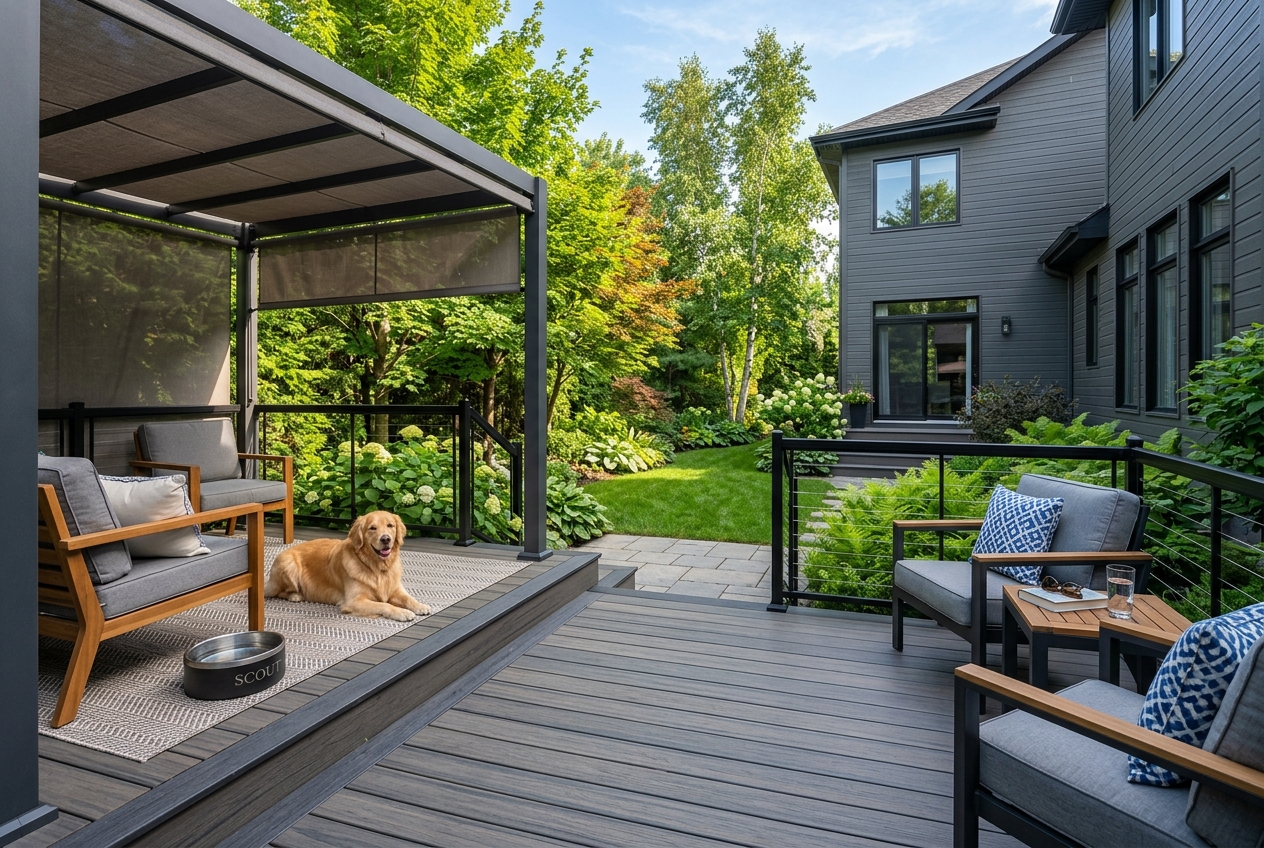
Heatwaves and pets: how to protect your dog's paws on a composite deck in Quebec
Summer in Quebec is a beautiful season, particularly during the months of July and August when the days stretch out and invite us to live outdoors. Owning a composite deck is an absolute charm for enjoying vacations at home, hosting memorable summer evenings, and entertaining guests without worrying about the constant maintenance that traditional wood requires. However, when the famous Quebec heatwave strikes, the blazing sun quickly transforms our relaxation spaces into potentially very hot surfaces. While we have the reflex to slip on our sandals, our faithful four-legged companions often go out barefoot, exposing themselves to the risks of uncomfortable, and even dangerous, burns to their paws.
This post is specifically for pet owners who want to balance the beauty of their composite patio with pet safety during the intense summer heat. Unlike general guides on cooling outdoor spaces, we focus here on concrete solutions to protect your dog's paw pads from heat accumulation. From applying the 7-second test to creating low shade zones, and installing specific protective mats and hydration stations, discover how to make your backyard a truly safe haven for your pet, even at the height of a heatwave.
1. The reality of summer heatwaves in Quebec
The months of July and August in Quebec are often marked by periods of intense heat where the mercury climbs above 30 degrees Celsius, with a stifling humidex. While we eagerly await this heat to enjoy our vacations at home and our pools, these extreme weather conditions radically transform our outdoor spaces. The blazing sun beats directly down on the surfaces of our backyards, creating sometimes unsuspected heat islands. For dog owners, this summer reality requires heightened vigilance. A deck that seems perfectly comfortable for a human wearing shoes can turn out to be a dangerously scorching surface for a pet venturing out unprotected. It is therefore essential to anticipate these temperature variations.
2. Why does a composite patio accumulate heat?
Unlike traditional wood, which has a certain natural capacity to dissipate heat, composite materials are extremely dense. Manufactured from a blend of wood fibers and recycled polymers, composite boards offer exceptional durability and withstand the rigors of our harsh Quebec climate. However, this same density causes them to absorb and retain more thermal energy from the sun's ultraviolet rays. In the middle of summer, on a cloudless day, the surface temperature of a south-facing patio can easily exceed the ambient temperature by several degrees. This thermal accumulation becomes a major issue for pet safety during heatwaves, requiring wise adaptation strategies.
3. The anatomy of your dog's paw pads: sensitive and vulnerable
It is easy to believe that dogs' paws are made of indestructible leather, capable of enduring anything. In reality, although the pads are covered with a thicker layer of keratinized skin than ours, they remain extremely sensitive tissues. They are equipped with numerous nerve endings and sweat glands that help the animal regulate its body temperature. When a dog walks on a scorching surface like asphalt or an overheated composite deck, the heat quickly penetrates the skin layers, causing cellular damage. Prolonged exposure can lead to blisters, painful ulcerations, and even severe infections that will require costly veterinary care and a long recovery period.
4. The 7-second test: the golden rule of pet safety
Even before opening the patio door to let your dog out on a hot summer day, there is a simple and foolproof method to assess the danger: the 7-second test. Place the back of your bare hand directly on the surface of your composite deck. If you cannot comfortably keep your hand in contact with the boards for a full seven seconds because the heat is too intense, it means the surface is way too hot for your dog's paws. This quick test should become a daily habit during the months of July and August. It allows you to make informed decisions and immediately apply the necessary protective measures before your pet gets hurt.
5. Recognizing the signs of paw pad burns in dogs
Despite our best intentions, an accident can happen if the dog slips out onto the patio at the wrong time. It is crucial to know how to quickly identify the signs of distress related to thermal burns. Here are the symptoms you should pay immediate attention to:
- Limping or refusal to walk: The dog lifts its paws abnormally or refuses to move forward on the deck.
- Excessive licking: The animal frantically licks or chews its pads to soothe the pain.
- Color change: The pads become abnormally red, dark, or appear blistered.
- Presence of blisters: Visible blisters or pieces of skin peeling off under the paw.
- Whimpering: Obvious signs of pain when the paws are handled.
6. Creating low shade zones: your pet's cooling oasis
To counter the radiant heat of the composite, creating shade is your best ally. However, a large umbrella designed for humans does not always cast shade optimally for an animal close to the ground. It is essential to set up low and targeted shade zones. You can use shade sails stretched at mid-height, set up a small dog tent directly on the deck, or strategically tilt a cantilever umbrella to block the afternoon sun at floor level. These small shaded refuges will prevent the sun from directly heating the composite in that specific spot, thereby offering your companion a safe space to lie down and enjoy the outdoors without burning their belly or paws.
7. Specific protective mats for the composite deck
One of the most effective and aesthetically pleasing solutions to protect your dog's paws is to roll out outdoor protective mats on the main traffic areas of your patio. Opt for mats designed for outdoor use, ideally in light shades that reflect light rather than absorb it. These rugs create an instant thermal barrier between the animal's sensitive pads and the hot composite boards. Make sure to choose breathable materials that do not trap moisture underneath, in order to preserve the integrity of your deck. By placing these mats from the door to the shade zone or towards the grass, you create an essential safety corridor during a heatwave.
8. The importance of strategic hydration stations on the patio
The heat of the ground doesn't just affect the paws; it increases your dog's overall body temperature. To help them thermoregulate effectively during your summer relaxation moments, install one or more hydration stations directly on the deck. Place a large bowl of fresh water, preferably made of ceramic or double-walled stainless steel to keep it cool, in one of the low shade zones you have created. Don't hesitate to add a few ice cubes on days of extreme heat. Adequate and easily accessible hydration encourages your dog to drink more often, thus preventing heatstroke while allowing them to stay by your side as you enjoy your vacations at home.
9. Choice of colors and materials: Fiberon, TimberTech, Trex or TruNorth
If you are in the planning phase of your new deck or considering a renovation, the choice of material will have a direct impact on heat management. The major brands in the industry, such as Fiberon, TimberTech, Trex or TruNorth, have developed cutting-edge technologies to address this specific challenge. These manufacturers now offer composite lines incorporating UV-reflective pigments, allowing the boards to stay considerably cooler than previous generations. Furthermore, opting for light shades like gris pâle, sable, or beige clair will drastically reduce thermal absorption compared to dark colors like espresso or charbon. A wise choice from the start makes life much easier for your pets later on.
10. Hosing down the deck: a quick solution before going out
Sometimes your dog has an urgent need to go out in the middle of the afternoon, right when the deck is at its hottest point. A simple and incredibly effective trick is to use your garden hose to generously spray the walkway area on the patio. The rapid evaporation of water on the hot composite will extract heat from the surface, dropping the temperature of the boards by several degrees in just a few seconds. This evaporative cooling technique creates a safe window of time allowing your dog to cross the deck to reach the grass without burning its paws. It's a perfect emergency method during the worst days of a heatwave.
11. Adapting the schedule for outings and relaxation times
Prevention also involves modifying your daily habits. During the months of July and August, the heat stored by your patio reaches its peak between 1:00 PM and 5:00 PM. To ensure your pet's safety, adapt the schedule of your relaxation times on the deck. Favor morning outings, when the composite is still cool from the night, to play with your dog or have your coffee. Reserve the hottest hours for resting indoors under the air conditioning. By synchronizing your pet's lifestyle with the thermal cycle of your backyard, you almost completely eliminate the risk of paw pad burns.
12. Integrating cooling plants around the resting area
Landscaping on and around your deck can play a major role in regulating the ambient temperature. Integrating large potted plants, such as majestic ferns, outdoor palms, or leafy shrubs, not only creates additional shade but also cools the surrounding air through the process of evapotranspiration. By grouping several plants around your dog's resting area, you create a truly cool and pleasant microclimate. Moreover, these greenery elements add an undeniable aesthetic touch to your space, transforming your patio into a true tropical oasis perfect for your vacations at home.
13. Small dog pools: a perfect addition for vacations at home
To combine business with pleasure during a heatwave, why not set up a small pool specially designed for dogs in the immediate vicinity of your deck? Whether it's a rigid plastic or foldable model, a wading pool filled with a few inches of fresh water allows your pet to wet its paws at will. Since dogs regulate a large part of their temperature through their pads, simply walking in the water helps them cool down instantly. Place the pool in the shade, at the edge of the patio, and watch your companion fully enjoy their summer days safely and with maximum fun.
14. Using protective booties: for or against on the deck?
Dog booties or protective shoes are often associated with the Quebec winter to protect against salt and cold, but they also exist in summer versions. Made of lightweight and breathable materials with insulating soles, these booties can be a temporary solution if your dog absolutely must stay on a hot surface. However, it is important not to leave them on the animal's paws for prolonged periods, as dogs sweat through their pads. Using them only to cross the deck during critical hours is a great idea, but once in the shade or on the grass, it is best to remove them to allow the paw to breathe naturally.
15. Hosting guests with pets: how to prepare your space
Summer is the quintessential season for hosting guests, organizing barbecues, and celebrating the holidays. It is common for your friends or family members to bring their own dogs. As a host with a composite deck, it is your responsibility to warn your guests about the risks associated with the surface heat. Upon their arrival, inform them of the 7-second test rule and show them the low shade zones and water stations you have set up. Roll out your extra protective mats to create large safe spaces where all the animals can interact and rest without risking paw injuries while you enjoy your gathering.
16. Enjoying summer evenings: the ideal time to safely enjoy the patio
One of the greatest pleasures of owning a deck in Quebec is being able to lounge on it during balmy summer evenings. Once the sun goes down, the air temperature drops and your composite patio begins to dissipate the heat accumulated during the day. This is the ideal time to reopen the patio door and let your dog roam freely. Summer evenings offer a relaxing atmosphere, without the stress of potential burns. It's the perfect opportunity to turn on some ambient lights, settle comfortably on your patio furniture, and share a bonding moment with your pet in a completely safe and soothing environment.
17. Summer maintenance of your deck to maximize heat dissipation
An often overlooked aspect of heat management is the maintenance of the deck itself. A clean surface, free of ingrained dirt, dark dust, or pollen, will better reflect sunlight. Additionally, it is crucial to ensure that the space under your patio is well ventilated. Good airflow under the composite structure allows heat to escape more quickly, preventing the floor from baking from underneath. Make sure that deck skirting or lattice does not completely block the wind. This simple preventive maintenance goes a long way in maintaining more acceptable surface temperatures for your dog's paws.
18. Preventing heatstroke: beyond the paw pads
While protecting the paw pads is vital on a composite deck, it is part of an overall approach to preventing heatstroke (hyperthermia) in dogs. An animal that is too hot on the patio will pant excessively, appear lethargic, or have very red gums. Brachycephalic breeds (like Bulldogs or Pugs), senior, or overweight dogs are even more vulnerable to heatwaves. Make sure never to force your dog to stay outside if it tries to go back inside to cool down. Your patio layout must always include an easy exit route back into the house so the animal can take refuge there if it feels the heat is becoming unbearable.
19. Investing in smart landscaping to block the sun
For a long-term solution that will not only protect your dog's paws but also improve your overall comfort, consider strategic landscaping. Planting deciduous trees on the west or south side of your backyard will create a majestic natural umbrella that will block the burning rays of the late afternoon sun. Installing a pergola covered with climbing vines or louvered privacy screens can also filter the light before it hits the composite of your deck. These lasting investments will radically transform the microclimate of your yard, making every summer day, even in the middle of a heatwave, pleasant and safe for all family members, both two- and four-legged.